4 Pointed Star Spiritual Meaning and Symbolism
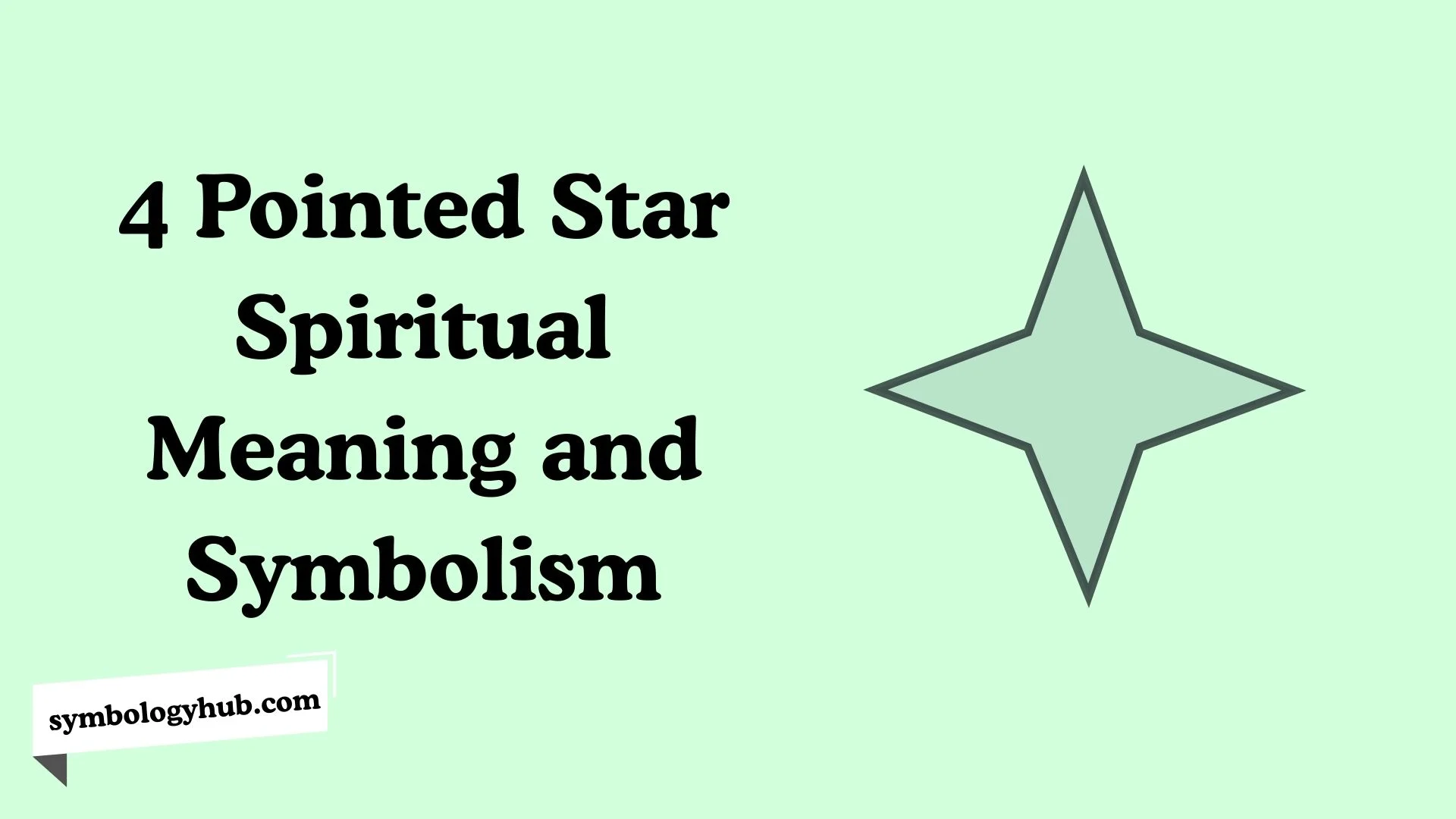
The 4 Pointed Star Spiritual Meaning and Symbolism has fascinated people for centuries. At first glance, it looks simple—just four rays crossing in a balanced shape. However, that simplicity hides layers of history, faith, and cultural meaning.
In the United States, the four-pointed star often represents guidance, clarity, and direction. You’ll see it in church art, holiday décor, logos, and even tattoos. At the same time, older traditions connect it to the four directions, the four elements, and the idea of balance in life.
So what does this steady, cross-shaped star truly stand for today? Let’s explore its roots and how Americans understand it now.
Did You Know?
Did you know the four-pointed star is one of the oldest directional symbols in human history? Long before modern maps, ancient cultures used four-rated star shapes to represent the four cardinal directions—north, south, east, and west—symbolising balance and wholeness. In early Christian art, it sometimes stood for divine guidance and the light of Bethlehem, while in Indigenous traditions it reflected the sacred relationship between land and sky. Today in the United States, this simple shape appears in Christmas decor, tattoos, compass designs, and digital sparkle icons, quietly carrying themes of clarity, protection, and personal direction.
What Is a 4 Pointed Star?
Before diving into meaning, it helps to picture the symbol clearly. The four-pointed star usually forms a cross shape, with four equal rays extending up, down, left, and right. Sometimes the vertical rays are longer, creating a compass-like look.
Common Visual Forms
• Cross-shaped star with equal rays
• Diamond style with sharp, symmetrical points
• Compass star with elongated north-south axis
• Minimalist sparkle icon in modern design
In American design, it often appears as a clean, geometric icon. In religious art, it may glow with golden light. In contrast, modern brands use it as a “spark” to suggest brilliance or excellence.
Because it’s simple, it adapts easily. That flexibility is one reason it remains popular.
Historical Roots of the Four-Pointed Star
The four-pointed star didn’t begin in one single culture. Instead, versions of it appeared in ancient civilizations across the world.
Ancient Civilizations
In Mesopotamia, star symbols represented gods and celestial power. Although many stars had more points, simple four-rayed stars appeared in early carvings and seals.
In ancient Egypt, cross-like star shapes symbolized the heavens. Meanwhile, Indigenous cultures in North America used four-direction symbols tied to earth-based spirituality.
The Number Four in Ancient Thought
Across cultures, the number four carried special meaning:
• Four cardinal directions
• Four seasons
• Four classical elements
• Four stages of life
Because of this, the four-pointed star often became a visual shortcut for wholeness and order.
4 Pointed Star Symbolism in the United States
In the United States, meaning often blends Christian, civic, and personal interpretations. Over time, the symbol moved from sacred art into everyday life.
Spiritual and Religious Context
In Christian settings, the four-pointed star can symbolize:
• The Star of Bethlehem
• God’s guiding light
• Divine presence in the world
• The spread of faith in four directions
Church stained glass sometimes features four-rayed stars near nativity scenes. During Christmas, star toppers often resemble this shape.
Secular American Meaning
Outside religion, Americans tend to associate it with:
• Direction and navigation
• Achievement or excellence
• Hope during dark times
• Stability and grounding
Because the United States has strong themes of independence and exploration, the compass-like star feels especially meaningful.
Four Directions and Balance
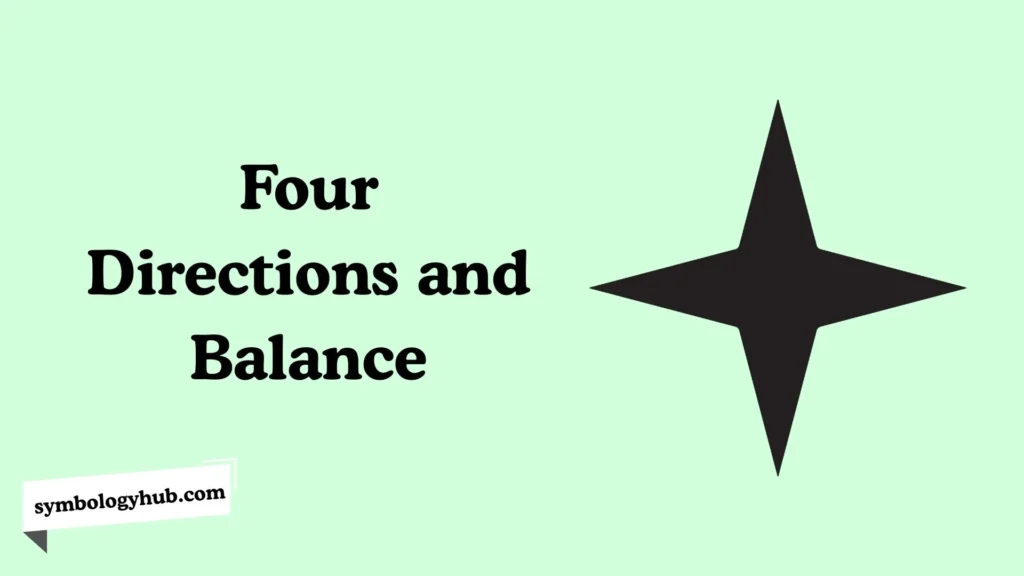
One of the strongest symbolic layers comes from the four directions: north, south, east, and west.
Direction as Life Path
The four-pointed star can represent a person standing at the center of their own life. Each point reaches outward, suggesting possibility.
• East — new beginnings
• West — reflection and endings
• North — wisdom and strength
• South — passion and growth
In American self-help culture, this interpretation fits well. It suggests balance, choice, and forward movement.
The Four Elements and Natural Harmony
Another common layer connects the star to the classical elements.
Elemental Symbolism
• Earth — stability and grounding
• Air — thought and communication
• Fire — passion and transformation
• Water — emotion and intuition
In modern spiritual communities across the USA, especially in nature-based practices, the four-pointed star may represent harmony among these forces.
This meaning feels less rigid and more personal. People often adapt it to their own beliefs.
Christian Meaning of the Four-Pointed Star
Christian symbolism strongly shaped American interpretations.
Light in Darkness
The star has long symbolized Christ as light in darkness. Because the shape resembles a cross, it also quietly echoes the crucifix.
In nativity art, a four-rayed star sometimes appears above the manger. That image reinforces themes of hope and divine guidance.
Four Gospels
Some Christian scholars link the four points to:
• Matthew
• Mark
• Luke
• John
In this view, the star spreads spiritual truth in every direction.
Psychological and Emotional Associations
Symbols shape how we feel, even when we don’t notice it.
Emotional Signals
The four-pointed star often conveys:
• Calm focus
• Clear direction
• Inner stability
• Balanced identity
Because it’s symmetrical, it feels steady. In contrast to chaotic shapes, this star suggests order.
In American culture, where self-definition matters deeply, a balanced symbol can feel reassuring.
4 Pointed Star in Tattoos and Personal Identity
Today, many people choose the four-pointed star as a tattoo. The design is small, clean, and meaningful.
Why People Choose It
• Represents finding one’s path
• Marks a spiritual awakening
• Honors travel or life changes
• Symbolizes protection
Some combine it with compass imagery. Others keep it minimal, just four simple rays.
Because it isn’t tied to one strict belief system, it feels flexible. That flexibility makes it appealing.
Modern Design, Branding, and Social Media
The symbol has also entered mainstream design.
Sparkle and Highlight Icon
On social media, a four-pointed “sparkle” often signals:
• Something new or exciting
• A highlight or feature
• Cleanliness or magic
• Positive transformation
Brands use it in logos to suggest brilliance or quality. However, in digital spaces, its meaning can feel lighter and less spiritual.
Symbolism Across Cultures
While this article focuses on the USA, the four-pointed star appears worldwide.
Cross-Cultural Themes
• Indigenous traditions — four sacred directions
• Asian traditions — balance and cosmic order
• European heraldry — guidance and nobility
• Middle Eastern art — celestial symbolism
Even though details differ, balance and direction appear again and again.
Controversies and Misunderstandings
Most of the time, the four-pointed star is neutral or positive. However, symbols can shift meaning depending on context.
Confusion With Other Stars
Some people confuse it with:
• The Star of Bethlehem
• The compass rose
• Four-pointed military insignia
• Certain political emblems
Context matters. A simple star in a tattoo differs from a military badge.
Unlike some multi-pointed stars, the four-pointed version has rarely been widely associated with hate movements. Still, interpretation depends on setting.
Meaning by Context in the USA
Below is a simple overview of how the four-pointed star functions in different American settings.
| Context | Meaning in the USA | Common Associations | Notes |
| Christian art | Divine guidance | Christmas, nativity | Often golden or glowing |
| Tattoos | Personal direction | Life journey, protection | Minimalist designs popular |
| Social media icons | Sparkle or highlight | New features, magic vibe | Mostly secular meaning |
| Compass imagery | Navigation and travel | Adventure, independence | Strong frontier symbolism |
| Home décor | Balance and calm | Rustic, farmhouse style | Often metal wall art |
As you can see, meaning shifts with setting.
Read More: Owl Symbolism: Spiritual and Symbolic Meaning of Owls
How Its Meaning Has Changed Over Time
Originally, the star symbol pointed to cosmic or divine power. Over centuries, it became more personal.
From Sacred to Personal
In ancient times, it marked the heavens. In medieval art, it signaled divine truth. Today, it often reflects individual growth.
Because American culture values personal meaning, the symbol now feels more about identity than authority.
However, older spiritual interpretations haven’t disappeared. They’ve simply blended into modern life.
FAQs:
What does a 4 pointed star symbolize spiritually?
Spiritually, it often symbolizes guidance, balance, and divine light. In the USA, many people connect it to direction and personal growth.
Is the four-pointed star Christian?
It can be used in Christian art, especially at Christmas. However, it’s not exclusively Christian and appears in many traditions.
Does the four-pointed star represent the four elements?
Yes, in some spiritual systems it represents earth, air, fire, and water. This meaning is common in modern nature-based practices.
Is it the same as a compass rose?
Not exactly. A compass rose usually has more points. Still, a four-pointed version can symbolize direction.
Is the four-pointed star controversial?
Generally, no. It has remained a mostly neutral and positive symbol in American culture.
Conclusion:
The 4 Pointed Star Spiritual Meaning and Symbolism blends simplicity with depth. At its heart, it represents guidance, balance, and light. Over time, it moved from ancient cosmic meanings into personal and cultural expression.
In the United States, the four-pointed star often signals direction, hope, and steady identity. Whether seen in a church window, a tattoo, or a social media icon, it continues to shine with layered meaning.
Sometimes the most powerful symbols are also the simplest. And this quiet, balanced star is a perfect example.


Post Comment