Whale Symbolism in the Bible: Meaning and Lessons

Whale symbolism has fascinated readers of the Bible for centuries. These massive sea creatures appear in stories about faith, obedience, fear, and spiritual transformation. In the United States, many people connect whales with deep wisdom, emotional healing, and God’s power over creation.
Although whales are mentioned only a few times in scripture, their symbolic meaning has grown through history. Today, Christians, spiritual readers, artists, and tattoo enthusiasts often view the whale as a sign of endurance, mystery, and divine guidance.
The most famous biblical whale story involves Jonah and the “great fish.” However, whale symbolism in the Bible reaches beyond that single story. It also reflects themes of mercy, humility, survival, and renewal.
Did You Know?
Did you know that the famous story of Jonah and the great fish is one of the main reasons whales became powerful spiritual symbols in Christianity? Many biblical scholars believe the creature represented a moment of transformation, mercy, and second chances rather than simple punishment. Today, whales are also seen as symbols of deep wisdom, emotional healing, inner reflection, and divine guidance in modern American spiritual culture.
Overview of Whale Symbolism in the Bible
Whales appear as powerful and mysterious creatures throughout religious and cultural storytelling. In the Bible, they are often connected with deep spiritual lessons rather than simple animal descriptions.
For many American readers today, whales symbolize emotional depth and God’s control over nature. Because whales live in the deep ocean, they also represent hidden truth and inner reflection.
Biblical Appearance of the Whale
The Bible does not always use the modern word “whale.” Older translations often mention a “great fish” or sea creature instead. However, many Christian traditions later connected these passages to whales.
The whale usually appears in dramatic settings involving storms, fear, survival, or miracles. These scenes give the creature strong symbolic meaning.
Common Meanings Associated With Whales
• Spiritual rebirth and second chances
• Obedience after personal struggle
• God’s power over creation
• Emotional depth and reflection
• Protection during hard times
• Mystery and divine wisdom
The Story of Jonah and the Great Fish
The story of Jonah remains the most famous source of biblical whale symbolism. It continues to shape how Americans understand the whale spiritually today.
Jonah tried to avoid God’s command and fled by sea. After a violent storm, he was swallowed by a great sea creature and remained inside it for three days and nights.
Why Jonah’s Whale Story Matters
This story teaches lessons about repentance, humility, and spiritual change. Instead of destroying Jonah, the creature became part of his rescue.
Many Christians view the whale as a symbol of temporary darkness leading toward growth. Because of this, the whale often represents difficult experiences that eventually transform a person.
Lessons People Commonly Take From Jonah
• You can’t easily escape personal truth
• Hard seasons may lead to spiritual growth
• Mercy often follows honest repentance
• Isolation can create inner reflection
• Faith sometimes grows during fear
Historical Background of Whale Symbolism
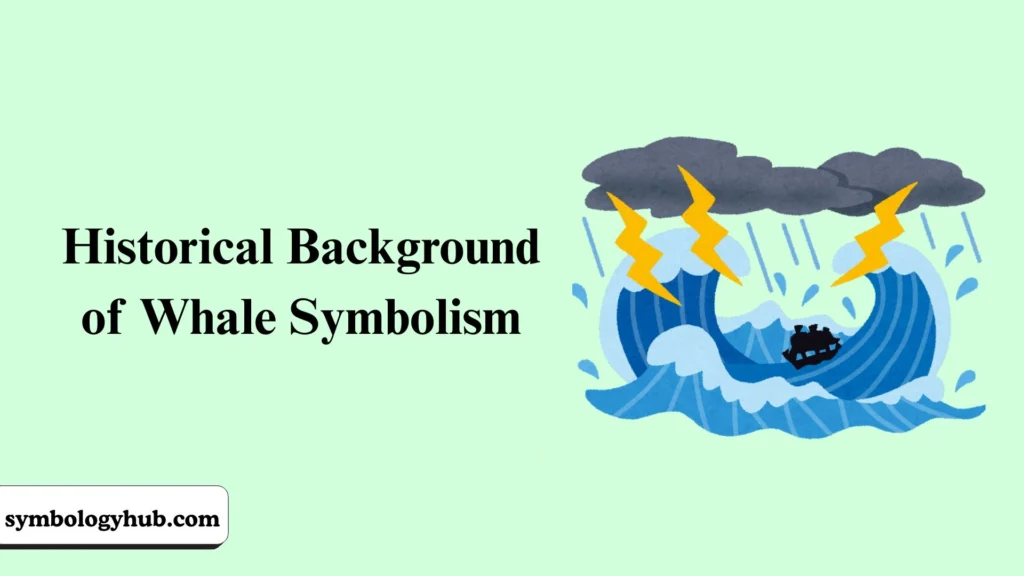
Whales carried symbolic meaning long before modern Christianity. Ancient people feared and respected giant sea creatures because oceans were dangerous and mysterious.
Over time, these meanings blended into religious storytelling and folklore. In many societies, whales became symbols of the unknown world beneath the surface.
Ancient Sea Symbolism
In ancient Middle Eastern traditions, the sea often represented chaos or spiritual testing. Large sea creatures symbolized forces beyond human control.
Because people rarely saw whales clearly, stories about them grew larger and more mystical over time. Some cultures viewed them as monsters, while others saw them as sacred beings.
Early Christian Interpretations
Early Christians often connected Jonah’s three days inside the creature with resurrection themes. This comparison later became important in Christian symbolism.
The whale eventually shifted from being feared to being spiritually meaningful. Instead of pure danger, it began representing transformation and divine purpose.
What Does the Whale Symbolize Spiritually?
Today, many spiritual readers connect whales with emotional wisdom and deep inner awareness. These meanings have become especially popular in the United States.
Whales are gentle yet powerful animals. Because of this balance, they often symbolize strength guided by peace rather than aggression.
Spiritual Themes Linked to Whales
• Inner healing and emotional release
• Listening to spiritual guidance
• Wisdom gained through hardship
• Patience during uncertain seasons
• Deep connection with creation
• Protection through difficult transitions
The Whale as a Symbol of Reflection
The deep ocean often represents the subconscious mind. Therefore, whales can symbolize thoughts or emotions hidden beneath the surface.
Many people also connect whale symbolism with meditation, prayer, and spiritual silence. Their slow movement and haunting songs reinforce this meaning.
Whale Symbolism in American Christian Culture
In the United States, whale symbolism has grown beyond church teachings. It now appears in books, motivational content, tattoos, home decor, and social media spirituality.
American audiences often focus on the whale’s emotional and inspirational meanings rather than fear-based interpretations.
Modern American Associations
| Context | Meaning in the USA | Common Associations | Notes |
| Christian teaching | Repentance and mercy | Jonah story | Most familiar meaning |
| Tattoos | Strength and resilience | Survival and growth | Popular coastal design |
| Spiritual communities | Emotional healing | Inner peace | Often tied to meditation |
| Environmental movements | Protection and wisdom | Ocean conservation | Modern symbolic shift |
| Social media art | Freedom and intuition | Calm energy | Frequently aestheticized |
Why Whales Feel Spiritually Powerful Today
Americans often associate whales with calm intelligence and emotional depth. Because modern culture values healing and self-discovery, whale symbolism fits naturally into spiritual discussions.
Movies, documentaries, and ocean conservation campaigns also shaped these softer meanings.
Whale Meaning in Christianity
Within Christianity, whales usually represent obedience, redemption, and God’s authority. However, interpretations can vary between traditions.
Some churches focus strongly on Jonah’s disobedience. Others emphasize God’s mercy and willingness to forgive.
Whale Symbolism and Redemption
The whale became a place of spiritual rebirth for Jonah. Because of this, many believers see it as a symbol of second chances.
The creature also reminds Christians that difficult situations may contain hidden purpose.
Connections to Resurrection Symbolism
Some Christian scholars compare Jonah’s three days in the sea creature to resurrection imagery. This interpretation became common in early Christian art and teaching.
Because of this connection, whales sometimes symbolize hope after spiritual darkness.
Cross-Cultural Meanings of Whales
Although biblical meanings are important, whales also hold symbolic value in many cultures worldwide. These interpretations often overlap with themes of wisdom and protection.
However, each culture views whales differently based on local history and beliefs.
Indigenous and Coastal Traditions
Many Indigenous coastal cultures respected whales as sacred beings connected to survival and nature. In some traditions, whales symbolized family protection and ancestral wisdom.
These meanings focused more on harmony with nature than punishment or fear.
Eastern Spiritual Interpretations
In some Eastern spiritual traditions, whales represent peace, intuition, and balance. Their movement through deep waters symbolizes emotional awareness and calm strength.
Today, these meanings often blend with modern American spirituality online.
Emotional and Psychological Meaning of Whales
Psychologically, whales often symbolize deep emotions and personal truth. Because they live beneath the ocean surface, they can represent hidden feelings or subconscious thoughts.
People frequently connect whale imagery with emotional release and healing.
Common Emotional Associations
• Calm strength during stress
• Emotional intelligence and empathy
• Loneliness mixed with wisdom
• Inner peace after struggle
• Connection to intuition
• Freedom from emotional pressure
Why Whale Imagery Feels Comforting
Whales move slowly and peacefully despite their huge size. Therefore, many people see them as symbols of gentle power rather than aggression.
Their songs also create emotional reactions. For some listeners, whale sounds feel calming or deeply spiritual.
Whale Symbolism in Dreams
Dreams about whales often leave strong emotional impressions. Many people believe these dreams reflect emotional growth, spiritual messages, or personal transformation.
Interpretations usually depend on the whale’s behavior and the dream’s mood.
Common Whale Dream Meanings
• Swimming whale: emotional balance and peace
• Aggressive whale: hidden stress or fear
• Flying whale: spiritual freedom and imagination
• Baby whale: emotional healing and vulnerability
• Stranded whale: emotional exhaustion or isolation
Biblical Dream Interpretations
Some Christians view whale dreams through Jonah’s story. In this context, the whale may symbolize a wake-up call or spiritual correction.
Others see it as reassurance during difficult life transitions.
Whale Tattoos and Modern Symbolism
Whale tattoos became increasingly popular in American culture during the 2020s. Many people choose them for emotional or spiritual reasons rather than simple aesthetics.
The whale’s massive size and peaceful nature create a meaningful contrast.
Popular Whale Tattoo Meanings
• Survival after hardship
• Emotional resilience
• Freedom and exploration
• Connection to the ocean
• Spiritual awakening
• Family loyalty and protection
Social Media and Whale Imagery
Today, whales appear widely in calming videos, inspirational posts, and spiritual artwork. Many creators use whale imagery to suggest peace, depth, and healing.
Because of this trend, younger audiences often associate whales with emotional wellness.
Misunderstandings and Controversies Around Whale Symbolism
Whale symbolism sometimes becomes oversimplified online. Many viral posts present one universal meaning, even though symbolism changes across cultures and religions.
This can create confusion about biblical interpretation.
Common Misunderstandings
• Assuming every whale symbol means good luck
• Treating all cultures’ meanings as identical
• Ignoring historical religious context
• Confusing spiritual symbolism with literal doctrine
Debates About the Jonah Story
Some people interpret Jonah’s story literally, while others see it symbolically. These debates continue in modern religious discussions.
However, both sides often agree on the story’s moral lessons about humility and transformation.
How Whale Symbolism Changed Over Time
Whale symbolism evolved dramatically across history. Earlier generations often feared giant sea creatures because oceans felt dangerous and unpredictable.
Today, whales are more commonly viewed as intelligent and emotionally complex animals.
Older Interpretations
In earlier religious art, whales sometimes appeared frightening or monstrous. They represented chaos, punishment, or divine testing.
These meanings reflected humanity’s fear of the unknown ocean.
Modern Interpretations
Modern audiences often focus on healing, wisdom, and emotional depth instead. Environmental awareness also changed public perception.
Because whales are now seen as vulnerable creatures needing protection, their symbolism became softer and more compassionate.
Whale Symbolism in Art and Literature

Whales appear often in American books, films, and visual art. These creative works helped shape modern symbolism.
Artists frequently use whales to represent isolation, mystery, or personal searching.
Literary Influence in America
Stories involving whales often explore human fear, ambition, or spirituality. Because of this, whales became symbols of emotional struggle and discovery.
Ocean imagery also creates feelings of vastness and uncertainty.
Visual Symbolism in Modern Media
• Deep blue oceans symbolize emotional depth
• Giant whales suggest power beyond human control
• Floating whales represent imagination and freedom
• Whale songs create mystery and reflection
• Ocean scenes often symbolise personal journeys
Read More: Sand Dollar Symbolism: Peace, Hope & Transformation
FAQs:
What does a whale symbolize in the Bible?
In the Bible, whales often symbolize transformation, repentance, and God’s power. The story of Jonah especially shaped these meanings.
Is the whale in Jonah actually a whale?
Some Bible translations say “great fish” instead of whale. However, many traditions later interpreted the creature as a whale.
What do whales symbolize spiritually today?
Today, whales commonly symbolize emotional healing, wisdom, intuition, and peaceful strength. These meanings are especially popular in American spiritual culture.
Are whales considered good symbols in Christianity?
Generally, yes. Although the whale appears during Jonah’s struggle, it ultimately becomes part of his rescue and transformation.
Why are whales linked with emotional depth?
Whales live in deep oceans and move calmly through powerful waters. Because of this, people often connect them with hidden emotions and inner wisdom.
What does dreaming about whales mean?
Whale dreams often symbolize emotional awareness, spiritual growth, or major life transitions. The exact meaning depends on the dream’s details and emotions.
Conclusion:
Whale symbolism has evolved from ancient fear into a deeper message of wisdom, transformation, and spiritual reflection. In biblical tradition, the whale reminds readers about repentance, mercy, and the power of personal change.
Today, Whale Symbolism in the Bible continues to inspire Americans through faith, art, tattoos, dreams, and emotional healing practices. Although meanings vary across cultures and beliefs, the whale still represents something larger than ourselves.
For many people, the whale is a reminder to slow down, reflect deeply, and trust the journey through uncertain waters.





Post Comment