Yew Symbolism: Spiritual Meaning, Immortality & Protection
The Yew Symbolism: Spiritual Meaning, Immortality & Protection is one of the most layered and mysterious natural symbols found in human history. The yew tree has appeared in sacred spaces, ancient myths, and modern cultural interpretations across centuries.
In the United States today, people often connect the yew with ideas of endurance, spiritual depth, and the boundary between life and death. However, its meaning stretches far beyond modern interpretations.
To understand it fully, we need to explore its ancient roots, cultural evolution, and emotional impact. The yew is not just a tree—it’s a living symbol shaped by thousands of years of belief, fear, and reverence.
Did You Know?
The yew tree is one of the oldest living tree species on Earth, with some specimens estimated to be over 2,000 years old, meaning it has silently witnessed entire civilizations rise and fall. What makes it even more fascinating is that almost every part of the tree is highly toxic, except the bright red flesh of its berries, yet it has still been revered for centuries as a powerful symbol of immortality, protection, and spiritual transition. In many ancient European traditions, yew trees were deliberately planted in sacred burial grounds, not because they symbolized death alone, but because they were believed to guard the space between the physical world and the spiritual realm, creating a lasting sense of mystery and reverence that continues even today.
What Is the Yew Tree?
The yew tree is an evergreen species known for its dark green needles and long lifespan. It can survive for hundreds or even thousands of years, making it a natural symbol of endurance.
Physical Characteristics and Appearance
• Dark, needle-like leaves that stay green year-round
• Red berries surrounding a poisonous seed
• Thick, often twisting trunk structure
• Slow-growing but extremely long-living nature
The tree often appears in cemeteries, churchyards, and sacred landscapes, especially in Europe.
Core Symbolism at a Glance
The yew carries several interconnected meanings that have developed over time.
Key Symbolic Meanings
• Immortality and eternal life
• Protection against negative forces
• Connection between life and death
• Spiritual transformation and renewal
• Wisdom gained through longevity
• Sacred presence in burial grounds
Ancient Origins of Yew Symbolism
The symbolic meaning of the yew dates back to ancient civilizations long before modern religion.
Prehistoric and Early European Beliefs
In early European cultures, the yew was linked to death rituals and sacred burial sites. Its ability to regenerate and live for centuries made it a natural symbol of eternal cycles.
People often planted yew trees near sacred grounds, believing they protected the spirits of the dead.
Yew in Celtic and Druid Traditions
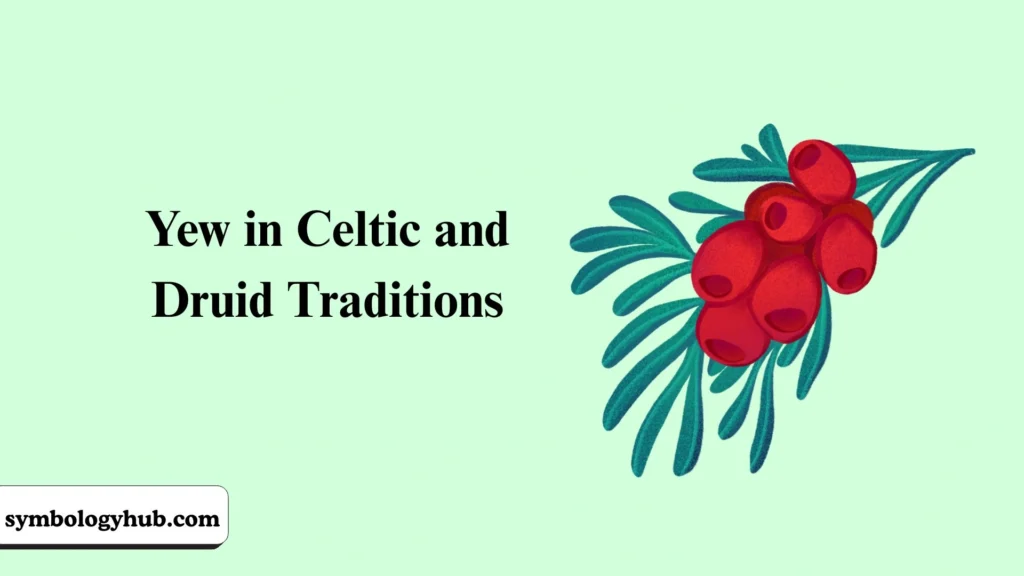
In Celtic and Druid traditions, the yew was considered a powerful spiritual tree.
Sacred Tree of Transition
The Druids believed the yew marked the boundary between worlds. It represented passage, transformation, and spiritual awareness.
• Planted near sacred meeting places
• Associated with prophecy and deep wisdom
• Used as a symbol of seasonal cycles
• Connected to ancestral spirits
Yew in Christianity and Churchyards
Across Europe, many churches were built near or around ancient yew trees.
Symbol of Eternal Life
In Christian symbolism, the yew became associated with resurrection and eternal life. Its evergreen nature represented life after death.
Churchyards often preserved existing yew trees, blending older traditions with newer religious meanings.
Immortality and Longevity Meaning
One of the strongest symbolic associations of the yew is immortality.
Why the Yew Represents Endless Life
Because yew trees can live for thousands of years, they naturally became symbols of timeless existence.
• Survives harsh weather and environmental changes
• Regenerates even when partially damaged
• Lives far beyond human generations
• Appears unchanged across centuries
Its long lifespan makes it a natural metaphor for continuity and eternal presence.
Protection and Boundary Symbolism
The yew is also widely seen as a protective symbol.
Spiritual Guardian Role
In many traditions, the yew was believed to guard sacred spaces and protect the living and the dead.
| Context | Meaning in Symbolism | Common Association | Notes |
| Churchyards | Protection of souls | Sacred resting place | Often planted near graves |
| Ancient groves | Boundary marker | Spirit world connection | Seen as liminal space |
| Homes in folklore | Spiritual protection | Safety and grounding | Rare but symbolic |
| Ritual spaces | Energy shielding | Sacred rituals | Associated with transitions |
The idea of “boundary protection” remains one of its strongest symbolic roles.
Yew Symbolism in the United States
In the United States, the yew is less tied to ancient rituals and more connected to symbolic interpretation.
Modern American Understanding
• Seen as a symbol of resilience and endurance
• Often used in landscaping for privacy and structure
• Associated with calmness and reflection
• Appears in literature and spiritual discussions
• Sometimes used in memorial garden design
In American culture, it is more symbolic than ritualistic, but still emotionally powerful.
Cross-Cultural and Global Meanings
The yew carries similar yet distinct meanings across cultures.
Global Interpretations
• Europe: death, rebirth, sacred protection
• Japan: longevity and resilience (symbolic overlap)
• Native European folklore: spiritual guardianship
• Modern spirituality: transformation and renewal
While meanings vary, the core theme of endurance remains consistent.
Psychological and Emotional Associations
The yew evokes strong emotional responses due to its appearance and history.
Emotional Symbolism
• Calmness and quiet reflection
• Mystery and spiritual depth
• Respect for time and aging
• Comfort in themes of continuity
• Subtle connection to mortality awareness
It often creates a feeling of stillness and introspection.
Read More: Lavender Symbolism: Spiritual Meaning, Healing & Calm Explained
Modern Uses of Yew Symbolism
Today, the yew appears in subtle but meaningful cultural expressions.
Contemporary Applications
• Tattoo designs representing life cycles
• Garden landscaping for privacy and structure
• Literature symbolizing time and memory
• Spiritual artwork and meditation imagery
• Memorial designs in cemeteries and parks
Its symbolism has become more personal and reflective in modern settings.
Misunderstandings, Toxicity, and Controversies
The yew is sometimes misunderstood due to its physical properties.
Important Clarifications
• All parts except red flesh are highly toxic
• Historical misuse in herbal practices caused danger
• Often mistaken as purely “death-related” symbol
• In reality, it also represents life and renewal
• Cultural meanings vary widely across regions
Its dual nature—life symbolism and toxicity—adds to its mystery.
Shifts in Meaning Over Time
The meaning of the yew has changed significantly across history.
Evolution of Symbolism
• Ancient era: sacred tree of spirits
• Medieval period: churchyard protector
• Modern era: symbolic of memory and endurance
• Contemporary view: personal reflection and identity
Despite changes, its core themes remain consistent.
Yew in Myth, Folklore, and Literature
The yew has appeared in many stories and symbolic traditions.
Literary and Mythic Presence
• Often described as a gateway between worlds
• Used in poetry to represent time and decay
• Appears in legends of ancient guardians
• Symbol of wisdom gained through age
• Frequently tied to forests and hidden knowledge
Its mystical reputation continues to influence storytelling today.
FAQs:
What does the yew tree symbolize spiritually?
It symbolizes immortality, protection, and spiritual transition. Many see it as a bridge between life and death.
Why are yew trees planted in graveyards?
They were believed to protect the dead and represent eternal life. Their longevity made them fitting for sacred spaces.
Is the yew tree connected to death?
Yes, but not only death. It also represents rebirth, renewal, and continuity beyond physical life.
What does the yew mean in modern culture?
Today, it often represents resilience, reflection, and emotional depth rather than literal spiritual beliefs.
Is the yew tree dangerous?
Yes, most parts are toxic if consumed. However, it remains safe as a symbolic and decorative tree when handled properly.
Conclusion:
The yew stands as one of the most powerful natural symbols shaped by human history. The Yew Symbolism: Spiritual Meaning, Immortality & Protection continues to evolve, blending ancient beliefs with modern interpretation.
Today, it represents far more than mystery or death. It reflects endurance, memory, and the quiet strength of time itself.




Post Comment