Banyan Tree Symbolism: Spiritual, Cultural & Eternal Meanings
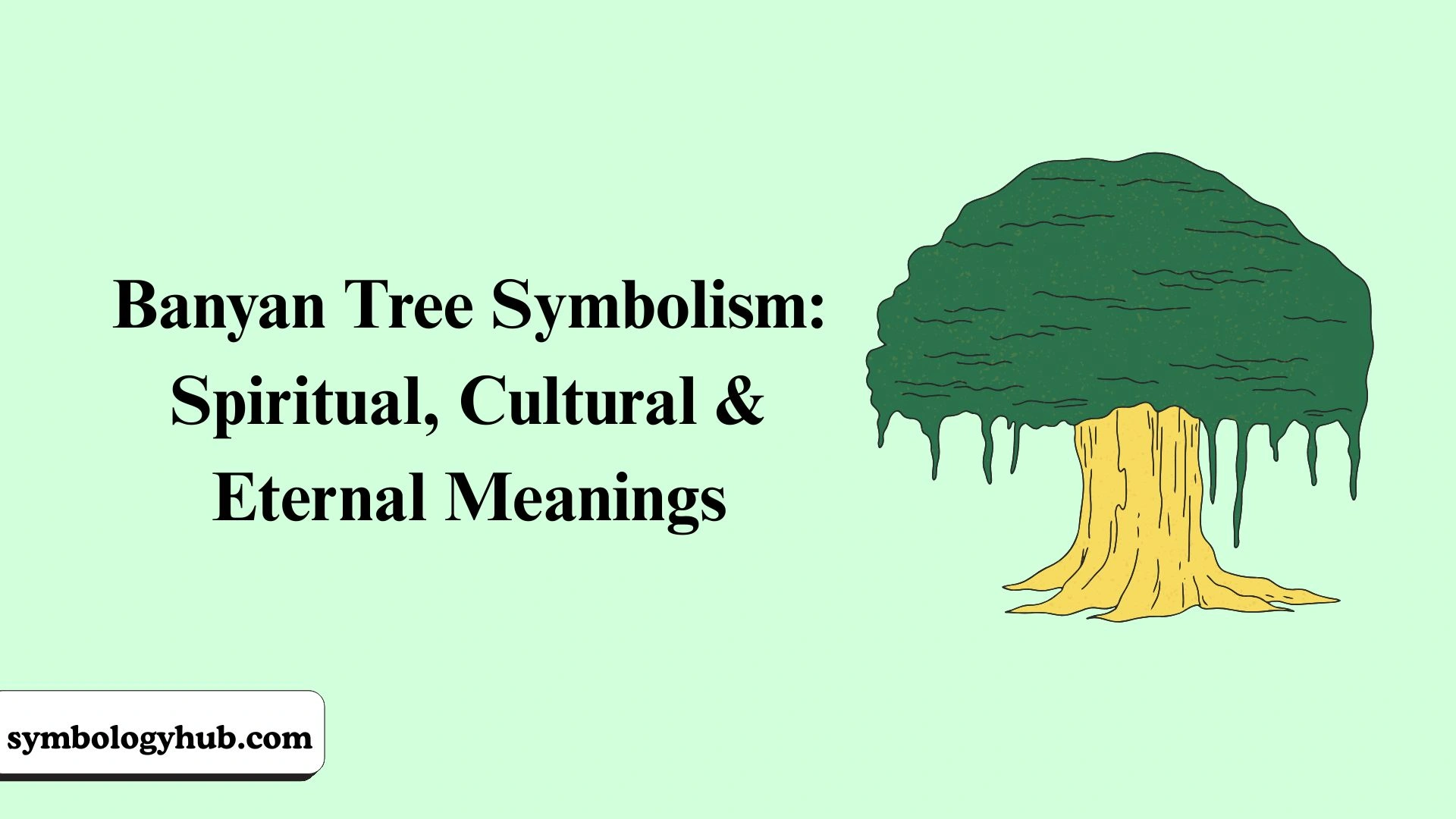
The banyan tree has fascinated people for thousands of years. Its vast canopy and hanging roots create a living world of shade and shelter. Because of this striking form, Banyan Tree Symbolism | Spiritual, Cultural & Eternal Meanings carries deep layers of interpretation across cultures.
In the United States, the banyan tree is often seen in botanical gardens, tropical regions like Hawaii and Florida, and spiritual art. However, its meaning goes far beyond appearance. It represents wisdom, longevity, grounding, and the interconnectedness of life.
Today, people are drawn to it not only for its beauty but also for its emotional and spiritual depth. It stands as a symbol of patience, expansion, and time itself.
Did You Know?
Did you know the banyan tree can grow so large that it looks like an entire forest made from a single tree? Its unique aerial roots hang down from branches and eventually become new trunks, allowing it to keep expanding for hundreds or even thousands of years. In India, some banyan trees are so massive they cover several acres of land and can shelter entire communities under their vast canopy. Because of this rare growth pattern, the banyan is often seen as a living symbol of eternity, unity, and endless expansion, making it one of the most spiritually meaningful trees in the world.
Overview of Banyan Tree Symbolism
This section introduces the banyan tree as both a physical and symbolic presence. It helps readers understand why this tree carries such powerful meaning in American and global culture.
Living Symbol of Connection
The banyan tree grows outward and downward at the same time. Its roots become new trunks, creating a network-like structure. Because of this, it naturally symbolizes unity and interdependence.
Why It Matters Today
In modern interpretation, especially in the USA, the tree often reflects balance, patience, and grounded thinking. It is used in wellness spaces and spiritual imagery.
• Represents interconnected life systems
• Symbolizes patience and long-term growth
• Reflects emotional grounding and stability
• Often linked to meditation spaces
• Used in eco-conscious design themes
Physical Appearance and Identifying Features
Understanding its form helps explain why its symbolism feels so powerful. The banyan tree is visually unique and almost architectural in structure.
A Tree That Becomes a Forest
The banyan sends aerial roots down from branches. Over time, these roots become thick trunks. This creates a forest-like structure from a single tree.
Natural Shelter and Expansion
Because of its wide canopy, it provides shade for large gatherings. In many cultures, it naturally becomes a meeting or resting place.
• Broad canopy covering large areas
• Hanging roots that form secondary trunks
• Thick, long-living structure
• Expands outward indefinitely
• Creates natural shaded spaces
Core Meanings at a Glance

This section simplifies the main symbolic ideas so readers can quickly understand the essence of the banyan tree.
Primary Symbolic Ideas
Across cultures and in the USA, a few meanings remain consistent. These are the most widely recognized interpretations.
Foundational Interpretations
The tree is most often linked to stability, wisdom, and continuity of life. It reflects both physical and spiritual endurance.
• Eternal life and continuity
• Wisdom gained through time
• Stability in changing environments
• Interconnectedness of existence
• Spiritual grounding and peace
Ancient Origins of the Banyan Tree Symbol
The symbolism of the banyan tree goes back thousands of years. Its meaning evolved across early civilizations that observed its unusual growth pattern.
Early Observations in Ancient Cultures
Ancient communities saw the tree as immortal because it kept expanding. Its ability to regenerate made it a symbol of endless life.
Mythic and Philosophical Roots
Many early philosophies used the tree to explain creation and existence. It often represented the structure of the universe.
• Ancient symbol of immortality
• Represented cosmic expansion
• Linked to creation myths
• Seen as a living world model
• Used in early spiritual teachings
Banyan Tree in Hindu Tradition and Sacred Texts
The banyan tree holds strong spiritual meaning in Hindu tradition. It is often seen as sacred and deeply symbolic of divine knowledge.
Tree of Wisdom and Shelter
It is associated with protection and spiritual teaching. Many stories describe sages meditating under its branches.
Symbol of Divine Presence
It is sometimes seen as a representation of eternal divine energy, reflecting the idea of life without beginning or end.
• Sacred symbol of wisdom
• Associated with spiritual teachers
• Represents divine protection
• Seen as eternal presence
• Linked to meditation practices
Buddhist Interpretations of the Banyan Tree
In Buddhist traditions, the banyan tree reflects enlightenment and mental clarity. It connects closely with ideas of awareness and detachment.
Symbol of Enlightenment Energy
Like the Bodhi tree concept, it reflects awakening and insight. It is associated with deep meditation.
Teaching of Impermanence
Even though it is long-living, it still changes and grows, reminding followers of life’s constant flow.
• Represents awakened awareness
• Encourages mindfulness practice
• Symbol of mental clarity
• Reflects impermanence of life
• Associated with meditation spaces
Symbolism in the United States Today
In the USA, the banyan tree is not native, but its symbolism is widely appreciated in wellness, design, and spiritual communities.
Modern American Meaning
It is often used as a metaphor for family roots, personal growth, and emotional grounding.
Presence in Culture and Spaces
You may see it in botanical gardens, yoga studios, and eco-themed art installations.
| Context | Meaning in the USA | Common Associations | Notes |
| Wellness spaces | Inner grounding | Meditation, calm | Used in yoga imagery |
| Family symbolism | Deep roots | Heritage, ancestry | Represents lineage |
| Nature design | Natural balance | Eco-living, harmony | Interior décor use |
| Spiritual art | Eternal growth | Mindfulness, reflection | Symbolic paintings |
| Education | Learning systems | Knowledge networks | Metaphorical use |
Psychological and Emotional Associations
This tree carries strong emotional meaning because of its protective and expansive nature.
Feelings It Evokes
People often feel calm, safe, and reflective when they see or imagine it.
Inner Reflection Symbol
It is frequently used to represent personal growth journeys and emotional grounding.
• Creates feeling of safety
• Encourages deep reflection
• Symbolizes emotional stability
• Represents personal evolution
• Inspires patience and calm
Read More: Forget-Me-Not Flower Symbolism: Love, Memory & Meaning
Banyan Tree in Art, Tattoos, and Modern Design
Modern culture has embraced the banyan tree as a visual symbol of strength and connection.
Tattoo Symbolism
People choose it to represent family roots, resilience, or spiritual grounding.
Design and Visual Culture
It appears in murals, home décor, and wellness branding.
• Popular tattoo for family roots
• Used in spiritual artwork
• Featured in nature-inspired décor
• Represents growth journeys
• Symbol in wellness branding
Cultural Spread Across Asia and Global Meaning
The banyan tree’s symbolism varies slightly across regions but remains deeply meaningful.
Global Interpretations
In many Asian cultures, it is a sacred meeting place and symbol of wisdom.
Universal Symbolism
Globally, it often stands for unity and the idea of life being interconnected.
• Sacred gathering place in Asia
• Symbol of community bonding
• Represents wisdom across cultures
• Seen as life’s interconnected web
• Universal sign of endurance
Misunderstandings and Cultural Appropriation Concerns
Because of its sacred roots, the banyan tree can sometimes be misrepresented.
Respectful Use Matters
In cultural and spiritual contexts, it should be used with awareness of its origins.
Common Misinterpretations
Some modern uses reduce it only to decoration, losing its deeper meaning.
• Can be oversimplified in design
• Sometimes used without context
• Sacred meaning may be ignored
• Needs respectful representation
• Cultural awareness is important
Banyan Tree and Concepts of Time, Eternity, and Memory
One of the strongest meanings of the banyan tree is its relationship with time.
Living Memory Structure
Because it keeps growing and expanding, it is often seen as a living record of time.
Symbol of Eternity
It represents continuity beyond a single human lifespan.
• Symbol of long-lasting memory
• Represents time without end
• Reflects generational continuity
• Seen as living history
• Connected to eternal cycles
Environmental and Ecological Symbolism

The banyan tree also holds meaning in ecological thinking and environmental awareness.
Natural Ecosystem Builder
Its structure supports many species and creates micro-environments.
Symbol of Sustainability
It represents balance between growth and support for life.
• Supports biodiversity systems
• Creates natural shelters
• Symbol of ecological balance
• Represents sustainable growth
• Encourages environmental respect
Shifts in Meaning Over Time and Modern Relevance
The meaning of the banyan tree has evolved while keeping its core symbolism intact.
From Sacred Tree to Global Symbol
It moved from local sacred spaces to global spiritual imagery.
Modern Interpretation
Today, it is widely used as a symbol of grounding and interconnected life.
• Shift from regional to global meaning
• Increased use in wellness culture
• Still linked to ancient wisdom
• Adopted in modern art and design
• Remains symbol of continuity
FAQs:
What does a banyan tree symbolize in simple terms?
It symbolizes eternity, wisdom, and interconnected life. In the USA, it often represents grounding and personal growth.
Why is the banyan tree considered sacred?
It is sacred in many traditions because it represents eternal life and spiritual wisdom. It is often linked to meditation and learning.
What does the banyan tree mean in American culture?
In American interpretation, it represents stability, family roots, and emotional grounding. It is commonly used in wellness spaces.
Is the banyan tree a symbol of life or death?
It is mainly a symbol of life, growth, and continuity. However, it also reflects the cycle of time and change.
Why is the banyan tree important in spirituality?
It represents deep connection, awareness, and inner peace. Many spiritual traditions use it as a symbol of enlightenment.
Conclusion:
The banyan tree stands as a powerful reminder of how life connects and expands over time. Its meaning stretches across cultures, yet it remains deeply grounded in ideas of wisdom, growth, and stability.
In understanding Banyan Tree Symbolism | Spiritual, Cultural & Eternal Meanings, we see more than just a tree. We see a living metaphor for time, memory, and connection. Its presence continues to inspire reflection, balance, and a deeper appreciation of life’s quiet strength.





Post Comment