Symbolism Clipart: Spiritual, Cultural, and Creative Uses Explained
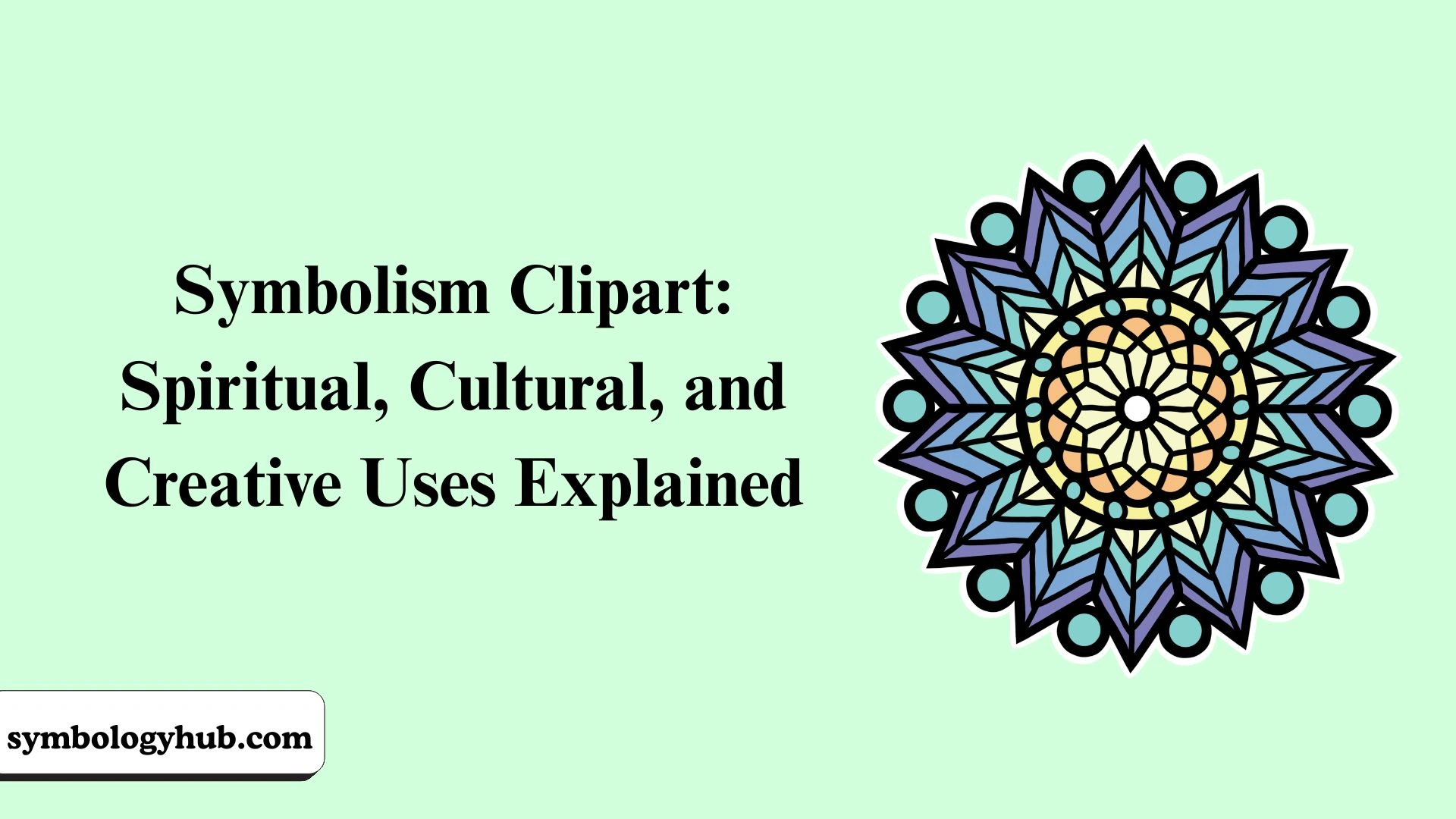
Symbolism Clipart: Spiritual, Cultural, and Creative Uses of Symbolic Graphics plays a quiet but powerful role in how people communicate ideas today. From simple heart icons to complex spiritual symbols, these small visuals carry deep meaning without needing words. In the United States, they appear everywhere—from classrooms and apps to tattoos and branding.
Even though they look simple, these graphics often carry centuries of meaning. They connect ancient beliefs, cultural traditions, and modern digital expression in one compact form. Because of this, clipart symbolism has become a universal visual language that speaks across cultures and generations.
Today, people use it not just for decoration but for identity, emotion, and storytelling. That’s what makes it worth exploring in depth.
Did You Know?
Did you know that the symbolism clipart isn’t just a modern digital invention, but many of its shapes trace back over 5,000 years to ancient civilizations like Egypt, Greece, and Mesopotamia? What looks like a simple icon today—such as a heart, star, or circle—once carried deep meanings tied to religion, mythology, and nature worship. In the United States, these symbols evolved into a universal visual language used in education, branding, social media, and tattoos, helping people communicate ideas instantly without words. Even more interesting, the same symbol can have different meanings across cultures, meaning a dove may represent peace in one place and spiritual purity in another, showing how powerful and flexible symbolic visuals really are.
Overview of Symbolism Clipart and Visual Language
Symbolism clipart refers to simplified visual icons that represent ideas, emotions, or beliefs. These images are designed for quick recognition and emotional impact. In the USA, they are widely used in education, digital apps, and design systems.
They matter because they allow people to communicate instantly. Instead of long explanations, a single symbol can express love, danger, peace, or spirituality. This makes them powerful tools in modern communication.
What Symbolism Clipart Represents in Modern Design
In modern design, symbolism clipart is more than decoration. It functions as a visual shortcut for meaning. Designers use it to guide attention, set tone, and communicate ideas quickly.
• Represents emotions like love, fear, and hope
• Used to simplify complex ideas in visuals
• Helps create instant recognition in branding
• Supports universal communication across languages
• Enhances storytelling in digital and print media
Historical Roots of Symbolic Graphics and Early Iconography
Symbolic visuals existed long before digital design. Ancient civilizations used symbols to represent gods, nature, and human ideas. These early icons laid the foundation for modern clipart systems.
In ancient Egypt, Greece, and early Indigenous cultures, symbols were carved into stone or painted on walls. These visuals helped preserve beliefs and stories before written language became common.
Over time, these symbols evolved into standardized forms used in religious art, manuscripts, and later printed materials.
Ancient Symbols and Pre-Digital Visual Communication
Before computers, symbolic graphics were already essential for communication. Religious manuscripts, flags, and seals all relied on simplified imagery.
• Egyptian hieroglyphs conveyed complex ideas visually
• Medieval manuscripts used symbolic illustrations
• Religious icons represented spiritual figures and concepts
• Heraldry used symbols for family identity and status
• Trade marks identified goods before modern branding
These systems show how humans have always relied on visuals to express meaning quickly.
Symbolism Clipart in American Culture and Media
In the United States, symbolism clipart plays a major role in everyday communication. It appears in classrooms, apps, public signs, and advertising.
It helps make information more accessible, especially in diverse communities. Because the USA includes many languages and cultures, symbols often bridge communication gaps.
Schools use it for learning tools, while businesses use it for branding and user experience design.
Emotional Meaning Behind Symbol-Based Graphics
Symbolism clipart often connects directly to emotion. People respond to symbols faster than words because they trigger instinctive understanding.
• Hearts represent love and connection
• Stars often signal hope or achievement
• Broken symbols suggest loss or sadness
• Flames can indicate passion or danger
• Flowers represent growth and beauty
These emotional meanings make symbols powerful in personal and public communication.
Spiritual Interpretations of Symbolic Clipart
Many symbolic graphics carry spiritual meaning rooted in ancient belief systems. Even in modern usage, these meanings still influence interpretation.
For example, circles often represent unity and eternity, while light-based symbols suggest purity or enlightenment. In spiritual communities, such visuals are used in meditation apps, religious art, and wellness branding.
However, interpretations vary widely depending on cultural background.
Cross-Cultural Symbolism in Graphic Elements
Symbols often shift meaning across cultures. A shape or icon may represent one idea in one region and something different elsewhere.
In the USA, cultural diversity shapes how people interpret these visuals. Designers often aim for neutral or universal meanings to avoid confusion.
Because of globalization, many symbols now carry blended meanings influenced by multiple traditions.
Symbolism Clipart in Tattoos, Branding, and Identity
Symbolic clipart has become a major part of personal expression. People choose symbols for tattoos, logos, and personal branding.
• Tattoos use symbols for identity and memory
• Brands use icons to create instant recognition
• Social groups adopt symbols for unity
• Artists use visuals to express abstract ideas
• Individuals use symbols for personal storytelling
These uses show how deeply symbols connect to identity in modern culture.
Social Media and Digital Expression Using Symbol Graphics
On social media, symbols act as emotional shortcuts. They replace long explanations with quick visual meaning.
People use them in profiles, captions, and messages to show mood or belief. Because attention spans are short online, symbols help communicate faster.
They also help create aesthetic styles in digital spaces like profiles, stories, and posts.
Misinterpretations and Cultural Sensitivity Issues
Not all symbolic clipart meanings are universal. Some symbols carry sensitive or historical weight in certain cultures.
Misuse can happen when symbols are taken out of context. A design that seems harmless in one setting may be offensive in another.
Designers and users should be aware of cultural backgrounds before using symbolic visuals in public communication.
Evolution From Traditional Symbols to Digital Clipart
Symbolic visuals have evolved from carved stone and painted art into digital libraries. Today, clipart systems standardize these symbols for easy use in software and apps.
This shift made symbolic communication faster and more global. However, it also simplified complex cultural meanings into basic icons.
Despite this simplification, many symbols still carry deep historical roots.
Read More: Black Diamond Symbolism: Meaning, Power, and Mystery
Practical Uses in Education, Marketing, and Storytelling
Symbolism clipart is widely used in practical communication fields. It helps simplify ideas and make content more engaging.
In education, it supports visual learning. In storytelling, it adds emotional depth without long explanations.
It is especially useful in multicultural environments where language barriers exist.
Common Types of Symbolism Clipart and Their Meanings
| Symbol Type | Meaning in the USA | Common Associations | Notes |
| Heart Icon | Love and affection | Romance, care, friendship | Most universally recognized |
| Star Symbol | Success and hope | Achievement, fame | Used in ratings and awards |
| Circle Shape | Unity and wholeness | Eternity, balance | Often used in spiritual design |
| Flame Icon | Energy and passion | Danger, strength | Can be positive or warning |
| Dove Symbol | Peace and harmony | Spirituality, freedom | Common in religious contexts |
| Leaf Symbol | Growth and nature | Health, renewal | Used in eco branding |
FAQs
What is symbolism clipart used for?
It is used to visually represent ideas, emotions, or beliefs in simple form. It appears in design, education, branding, and digital communication.
Why are symbols important in American design?
They help people communicate quickly across different languages and cultures. They also improve clarity in visual messaging.
Do symbols always mean the same thing?
No, meanings can change depending on culture and context. Some symbols have different interpretations globally.
Is symbolism clipart based on ancient history?
Yes, many modern symbols come from ancient religious and cultural traditions. They have evolved over thousands of years.
Where is symbolism clipart commonly used today?
It is widely used in apps, tattoos, education, marketing, and social media platforms.
Conclusion
Symbolism clipart: spiritual, cultural, and creative uses of symbolic graphics continues to shape how people communicate in the modern world. It connects ancient meaning systems with today’s digital expression in a simple but powerful way.
In the United States, these symbols are part of daily life, from education to personal identity. They carry emotion, history, and cultural depth in just a single shape. As visual communication grows, these symbols will likely remain central to how ideas are shared and understood.




Post Comment